


Blog / Service

Toyota Tire Guide: Tire Pressure, Warning Lights, Sizes, & More

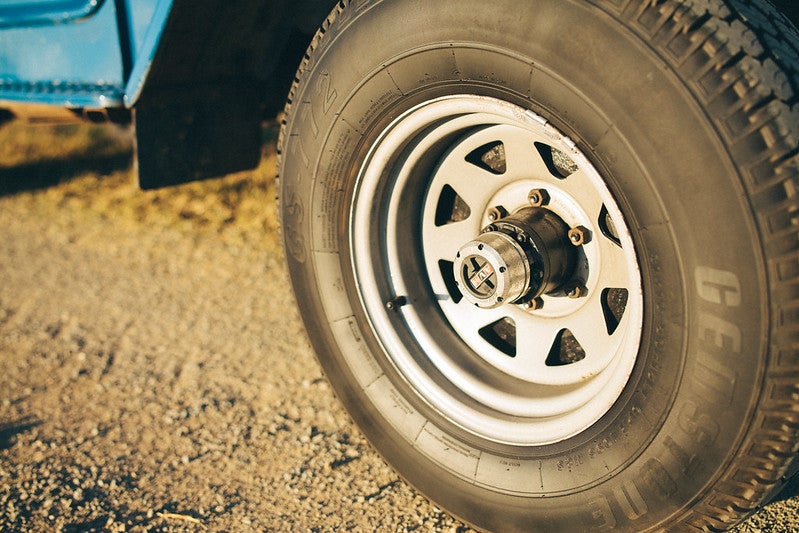
front right tire on a Toyota Landcruiser J40 driving on a dirt road

One could argue all day about the most important part of a car, but the tires are certainly near the top of this list. Equipping your vehicle with the right tires at the appropriate pressure not only ensures your safety but offers a good driving experience and saves you from excessive maintenance and repair costs. You probably don't think about your tire pressure until the warning light comes on in your car, so consider educating yourself through this guide. Dublin Toyota is here to give you all the tire pressure information you need to be a responsible vehicle owner.

What Is Tire Pressure?
front right tire on a Toyota Landcruiser J40 driving on a dirt road
Toyota Landcruiser J40 by dave.see is licensed with CC BY 2.0

Tire pressure describes the amount of force that the air inside of your car's tires creates. It essentially measures how inflated the tires are using the pounds per square inch (PSI) metric. Owners maintain their tire pressure according to manufacturer recommendations, though pressure can fluctuate based on factors like changing temperatures. Proper tire inflation reduces accelerated wear, ensuring you can safely drive on the road and use your tires for as long as possible before getting replacements.

Recommended Tire Pressure for Toyotas

Now that you understand the importance of properly inflating your tires, you might wonder what the ideal psi is for your Toyota. Passenger Toyota cars usually recommend between 32 psi to 35 psi, but ensure you know the correct psi for your specific model. Newer cars usually have a sticker on the inside of the driver's door that lists the recommended tire pressure. If your driver's door doesn't have a sticker, consult the owner's manual or online resources. Here are some example tire pressures according to their owner's manuals:

  • Toyota RAV4 tire pressure: The 2022 Toyota RAV4 calls for a maximum of 35 psi for the front and rear tires.
  • Toyota Camry tire pressure: The 2022 Toyota Camry has a maximum pressure of 35 psi for the front and rear tires.
  • Toyota Corolla tire pressure: The recommended psi for the 2022 Toyota Corolla is 38 psi for the front tires and 36 for the rear tires.

What Tire Sizes Mean

Aside from properly inflating your tires, ensure you equip your vehicle with properly sized tires. Tires meant for your car give you a better handling experience, improve fuel economy, and prevent alignment issues. They also improve traction and braking, make it easier to change directions, absorb road shocks, and support the weight of your vehicle. Whether you're getting new tires for your car or considering available options for a new vehicle, you might notice that tires have strings of numbers and letters on their sidewalls.

The letter at the very beginning of this string tells you what type of vehicle the tire is compatible with. "P" is common and indicates that the tire is for passenger vehicles. There's also "LT," which indicates that the tire is for light trucks. If the string has no letters at the beginning, it's a Euro-Metric tire that might have different load capacities than a P-Metric tire. The first three letters in the string indicate the width of the tire from sidewall to sidewall in millimeters.

For instance, a P215/65 R15 tire has a width of 215 millimeters. After the slash mark in the string is a number that indicates the ratio of the height of the tire's cross-section to its width. For a P215/65 R15 tire, the 65 aspect ratio means that the height is equal to 65% of the tire's width. The letter after the aspect ratio reveals the tire's construction type. For instance, "R" stands for Radial and indicates that the layers run radially. The final number indicates the wheel's diameter in inches.

Recommended Tires for Toyotas

The recommended tires for Toyotas depend on what year and model you have. You can choose the standard tires that come with the purchase of a new vehicle or opt for available options. Here are some examples of recommended tires for Toyota models:

  • Best tires for a Toyota Camry: The 2021 Toyota Camry Hybrid LE has a smaller tire size of 205/65R16 compared to other models that boast sizes like 235/45R18.
  • Best tires for a Toyota Highlander: A 2013 Toyota Highlander Hybrid has two recommended tire sizes: 245/65R17 and 245/55R19. If you opt for a 2021 model, you can choose between a 235/65R18 or 235/55R20 size depending on the trim.
  • Best tires for a Toyota Tacoma: As a midsize pickup truck, the 2021 Toyota Tacoma has tire sizes as large as 265/70R16.
  • Best tires for a Toyota Corolla: The smaller 2021 Toyota Corolla trims have a 195/65R15 tire size, while other trims feature a 225/40R18 tire size.

How To Check Tire Pressure on the Toyota App

Even if you have the right tires and inflate them properly, the tire pressure light for your Toyota might start to flash. Tire pressure can change because of conditions ranging from the weather to road bumps. You can check your tire pressure manually, but consider taking advantage of the Toyota app. This innovative technology makes it easy to view the psi from your smartphone and fill up (or deflate) if needed. Here's how to use the app if your Toyota tire pressure light comes on: 

  1. Download the app.
  2. Complete the registration process.
  3. Select "My Garage."
  4. Select "Maintenance."
  5. View the readout for your tire pressure.

How To Reset Your Tire Pressure Light

Filling your tires to the appropriate psi should cause the warning light to turn off, but it might remain on. The instructions for resetting your tire pressure light may vary depending on your vehicle's model, but here's how to reset the tire pressure light on a Toyota Corolla:

  1. Drive at or above 50 miles per hour for 10 minutes.
  2. Turn off the vehicle, then turn the key to the "On" position without starting the engine.
  3. Hold the TPMS reset button until the light blinks three times, then release it.
  4. Start the car and give the sensor 20 minutes to refresh.

Does ToyotaCare Cover Tires?

Whether you need maintenance for your tires for a Toyota Corolla, Tacoma, or Highlander, know that ToyotaCare covers tire rotations for the first two years or 25,000 miles. This no-cost maintenance plan comes with your purchase of a new Toyota.

We hope this guide gives you a better understanding of tire pressure, tire sizes, and everything in between. If you have questions about your vehicle's tires, be sure to contact Dublin Toyota today. We also provide maintenance services to keep your tires in excellent shape.
Posted in:

Related Posts

how to reset the tire pressure light on a toyota corolla

How To Reset The Tire Pressure Light On A Toyota Corolla

One of the most useful features on your Toyota Corolla is its Tire Pressure Monitoring System (TPMS), which alerts you if the air pressure in your tires needs adjusting. This advanced system keeps drivers informed of the condition of their tires, allowing them to respond quickly and get the best performance out of their vehicle. To reset your tire pressure light, place your key into the ignition and turn it slightly without starting the car, then hold down on the TPMS reset button until the light flashes three times and let go. more If you're still feeling unsure, our staff at Dublin Toyota in Dublin, CA, put together this guide explaining how to reset the tire pressure light on a Toyota Corolla so you can feel prepared the next time your tire pressure light comes on. Learn about how the TPMS works and how understanding it can ensure you always have a safe and capable vehicle ready to drive. Toyota Tire Pressure Monitoring System For nearly 15 years, all cars manufactured to be sold in the U.S. are required by law to have a tire pressure monitoring system, or TPMS. On your Toyota, the Tire Pressure Monitoring System uses tiny sensors to keep track of the amount of air pressure in each of your four tires. The system can detect when pressure levels drop below the recommended number for that specific model, and subsequently warn the driver by switching on a light. On your Corolla, the light will appear as an amber-colored exclamation point on your dashboard that's easy to notice. Why Is Your Tire Pressure Light On? There are two primary reasons for your tire pressure light to turn on: Weather changes: Sudden changes in weather can have a direct impact on the air pressure in your tires, especially when temperatures drop quickly. The low pressure in the air will reflect in your tires, and if you haven't kept up with regular tire checks, one of your tires may lose enough air to trigger the sensors in the TPMS. Air leak: Air leaks occur when items get lodged into your tires, causing air to leak out. These can be obvious, especially if you run over something large that immediately results in a flat tire, but tiny holes in your tires can release air slowly and trigger the TPMS light seemingly out of nowhere. Why Is Your Tire Pressure Light Blinking? A blinking tire pressure light on a Toyota Corolla has a different meaning than when the light simply turns on. This indicates an issue with the tire pressure monitoring system itself. Remember that the TPMS works because there are tiny sensors inside each of your tires, near the inner part of the rim. These sensors run on a battery, so if that battery needs to be replaced, the light flashes. A blinking light can also indicate an issue with the sensors altogether. If the sensors aren't functioning properly, you can unknowingly drive with low-pressure tires, which can be dangerous. Be aware of the additional warnings lights that can come up on your dashboard as well and when to take care of them, to ensure you have a safe and smooth drive Under-inflated vs. Inflated Tires It's clear that the Toyota TPMS is important for the safe operation of your vehicle, but just how crucial is it for tires to have the right air pressure? Here's a breakdown of how under-inflated tires compare in performance to ones with the proper amount of pressure: Under-inflated Tires If you've ever driven a vehicle with low tire pressure, you probably already know that the sensations are the first clue that something's off. Tires with low pressure have poor traction, which can be dangerous on slippery roads. They also can't bear the same amount of weight as properly inflated tires, which can cause them to sag and lead to a flat or blowout. The less air tires have, the more work your car has to do to propel your vehicle forward, which leads to poor fuel economy. Inflated Tires When a tire has the right amount of air, you can enjoy a much smoother and safer driving experience. Inflated tires last longer, as they undergo less wear and tear thanks to the reduced tread. You can also save money on gas, as inflated tires optimize your vehicle's fuel economy. How To Reset Tire Pressure Light on a Toyota Corolla Here are in-depth steps you can follow to reset the tire pressure light on your Toyota Corolla: 1. Turn Off the Engine If you notice your tire pressure light come on, park your vehicle in a safe spot and turn the engine off. If you can, adjust the pressure in your tires using the guide on the inside of your driver's side door as a number reference. You can also schedule a service appointment if you're not comfortable doing it yourself. 2. Turn the Vehicle "On" Next, put your key in the ignition and turn it slightly so that the vehicle enters the "On" position without starting the car. Using the buttons on your steering wheel, navigate to the Settings tab on your dashboard and select "Vehicle Settings." Press the "OK" button on your steering wheel and then click on "TPWS" to access your vehicle's warning system. 3. Press and Hold "Set Pressure" After selecting the "TPWS" button (which replaces the "M" for monitoring with a "W" for warning), navigate to "Set Pressure." Hold down on your steering wheel's "OK" button until you see the warning light blink three times. You should then see a "Setting Tire Pressure Warning System" message appear on your information display. This indicates that the reset is complete. Schedule a Service Appointment at Dublin Toyota The next time your tires need some air, schedule a service appointment with the experts at Dublin Toyota. Our team of professionals is more than capable of assessing your vehicle's condition and providing the proper maintenance and care to keep it running at its optimal condition for years to come. Looking to purchase authentic Toyota parts or customize your vehicle? Get in touch with our parts department to learn about our extensive line of OEM products and Toyota accessories. Contact us today to schedule your appointment and learn about our rotating service, financing, and leasing specials.